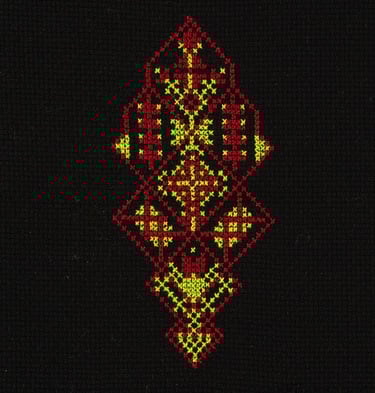
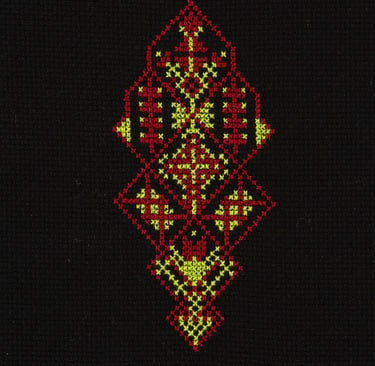
Stitching the Invisible

This embroidery practice unfolds as a form of inward discipline. It is not concerned with ornament, image, or symbolic display, but with repetition as a mode of knowing. The hand repeats where language falters, allowing attention to deepen through sustained, bodily engagement.

In Sufi thought, repetition is not excess. It is purification. Through return, the self is gradually stripped of noise, and the heart is trained to remain with what resists immediacy. Each stitch becomes an act of remembrance—not of a fixed meaning, but of presence itself.

The practice draws from Sufi literature not as reference, but as method. Texts that speak of the heart, of stations and states, of contraction and expansion, inform a way of working where meaning is approached obliquely. What emerges is not illustration, but residue: the trace of a process that unfolds slowly, through patience and endurance.

These works do not aim to reveal insight. They remain with the difficulty of attention. They ask how the body learns what the mind cannot grasp, and how sustained practice reshapes perception from within.
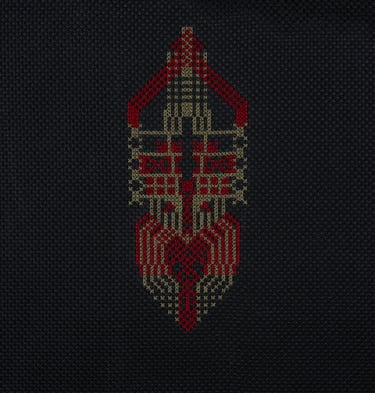
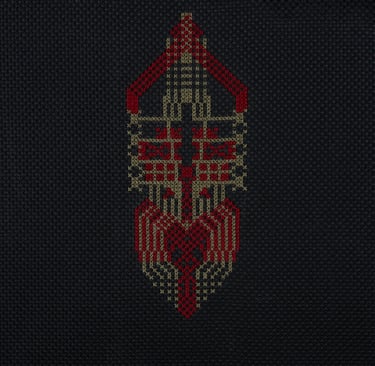
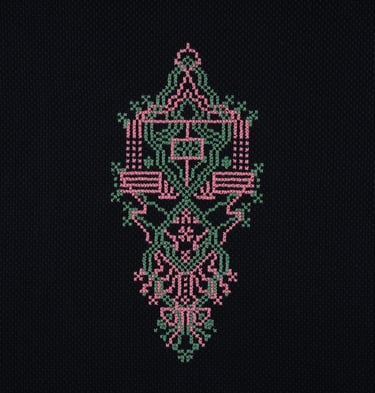
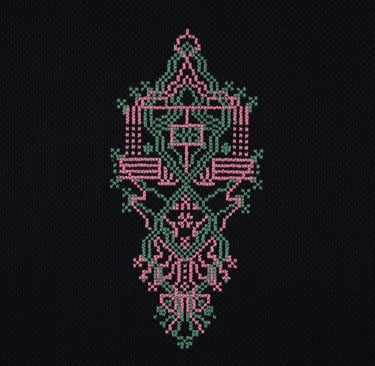
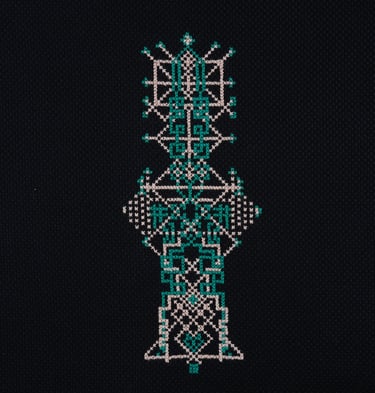
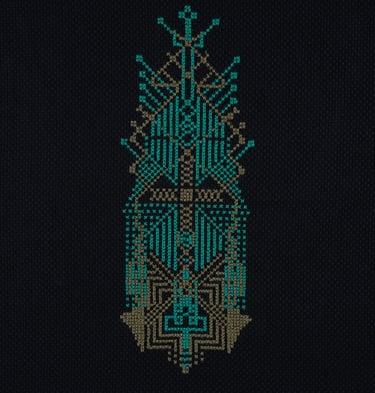
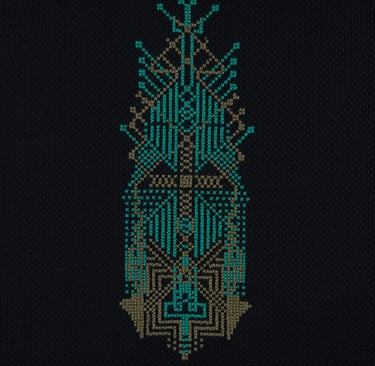
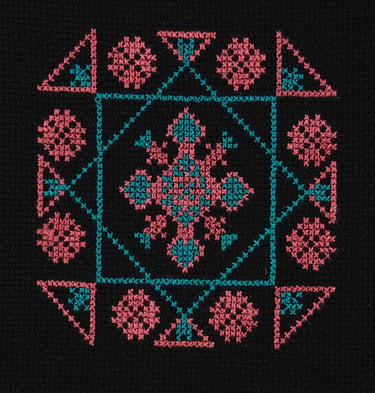
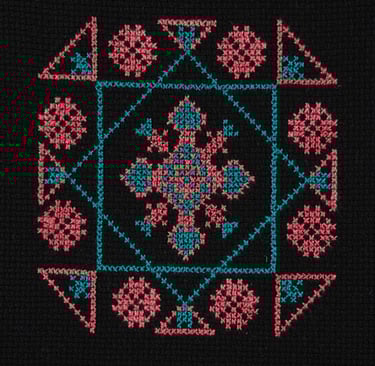
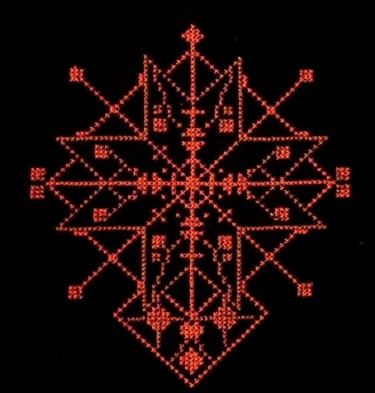
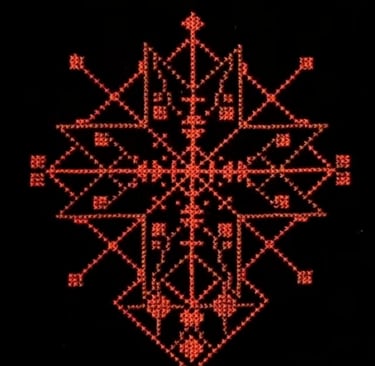
Talisman of the Rose collection — On the Work of the Heart - 2022

In Sufi literature, the heart is not a given essence but a field of labor. It is shaped through trial, return, and sustained inward work. The rose appears here not as symbol, but as a condition toward which the heart is gradually refined.

Each work in this series functions as a talisman in the oldest sense: not as protection, but as concentration. Through repetition, intention is held long enough to alter the inner terrain. Transformation, here, is not declared; it is rehearsed.

These works attend to the slow forming of coherence. They trace how patience reorganizes attention, and how the heart, through repetition, becomes capable of holding what once dispersed it.

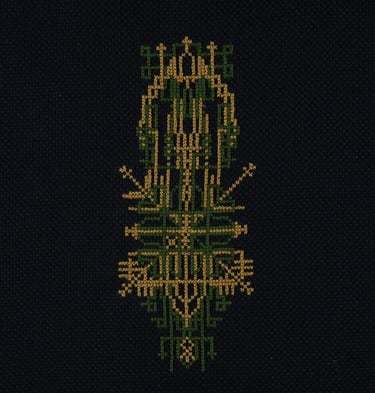
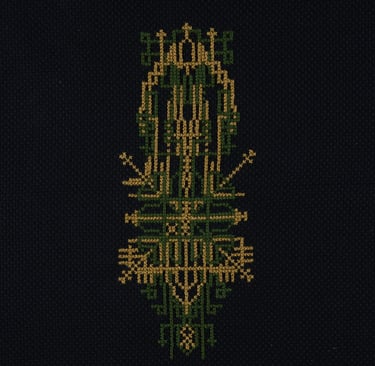
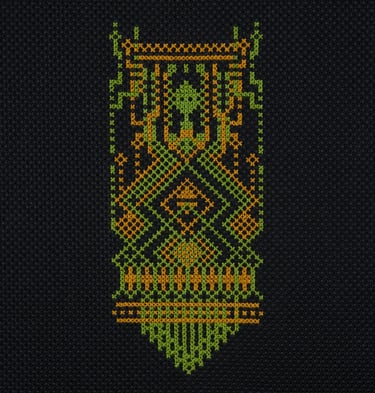
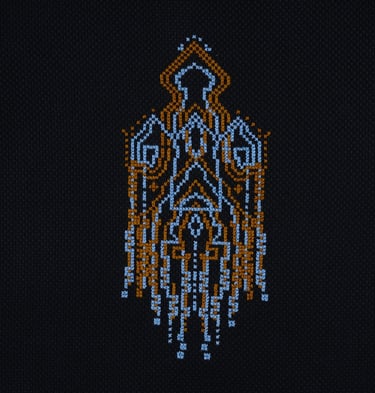
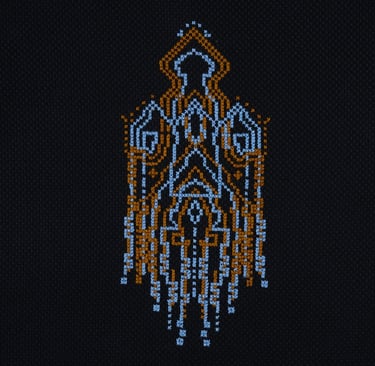
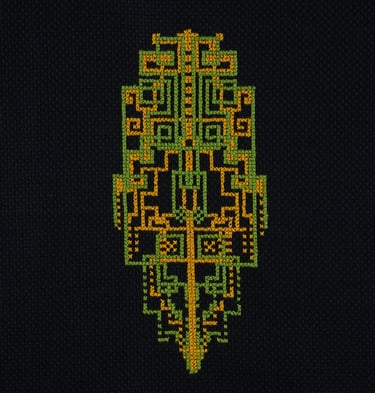
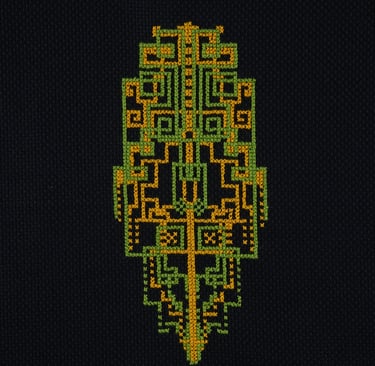
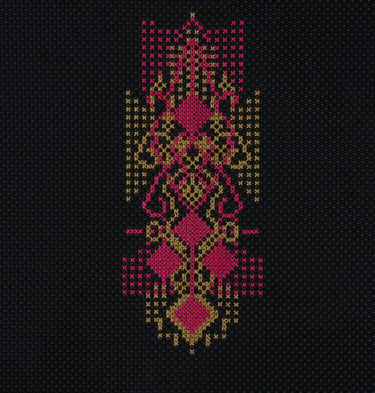
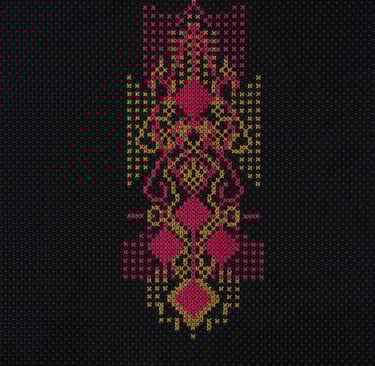
Portals of the Unseen - 2024

This embroidery practice begins from a Sufi intuition: that a door is never a simple boundary. A portal does not explain what lies beyond it—it intensifies the unknown. It is an entrance into plurality, a threshold that changes color and meaning each time the heart returns to it.

In Sufi literature, the world is not a single surface but a sequence of unveilings. What appears as “reality” is often described as layered, approached through openings rather than conclusions—doors of meaning that do not disclose themselves in advance. The portal, therefore, is not a symbol of certainty; it is a discipline of beginning: the moment the self senses a new horizon without being able to name it.

The portal remains central because it protects ambiguity from being reduced into explanation. It suggests that behind every visible form there are further chambers of meaning—multiple worlds, multiple beginnings—while the work itself stays faithful to the ethics of Sufi writing: to gesture, to suspend, and to keep the unseen active.

25 * 25 Cm