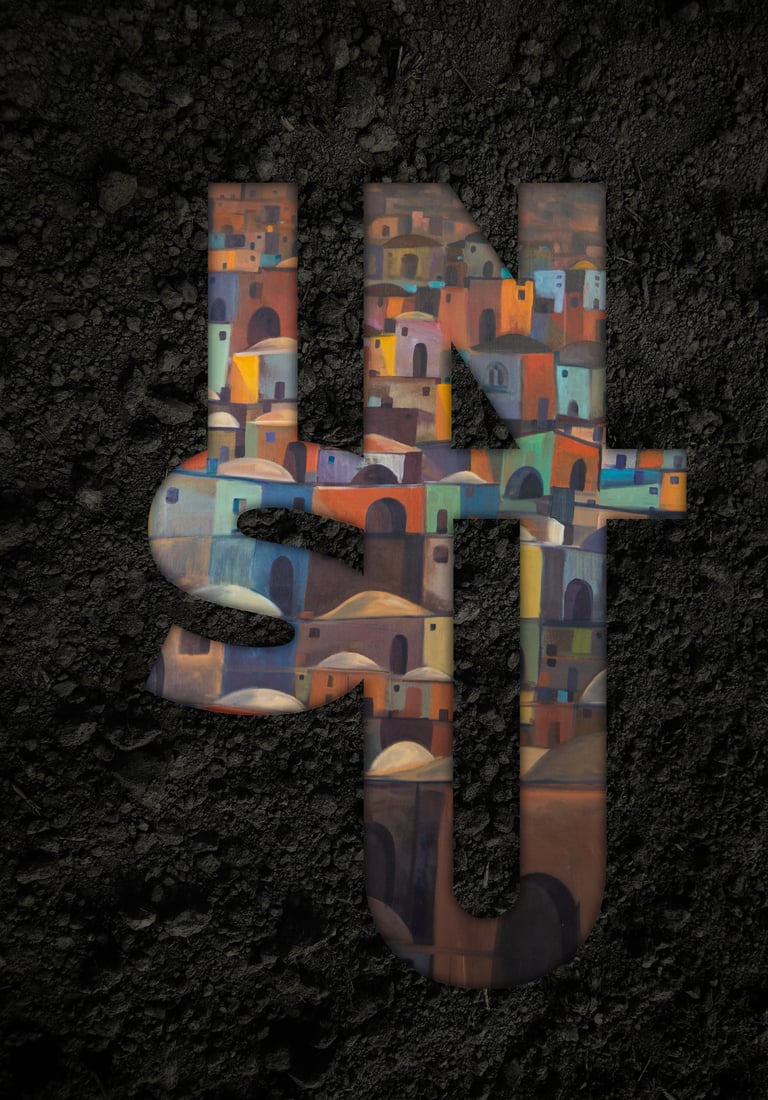
IN Situ
Appearance and disappearance... perusal and emanation.
Hebron, Palestine
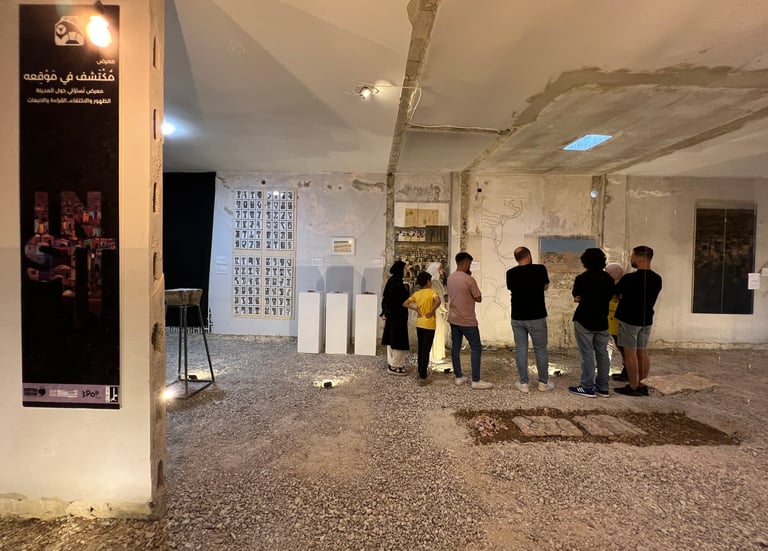
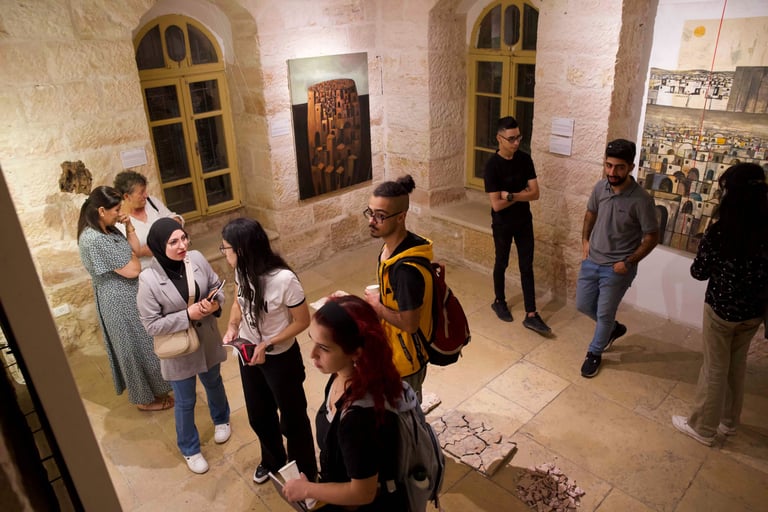
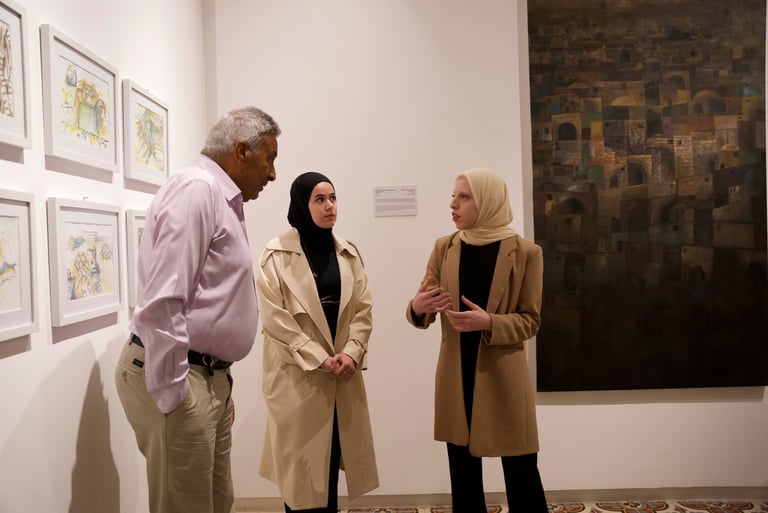
Realized across two sites: Tel Rumeida, Hebron, and the Khalil Sakakini Cultural Center, Ramallah.
Curatorial Project
Curatorial Statement
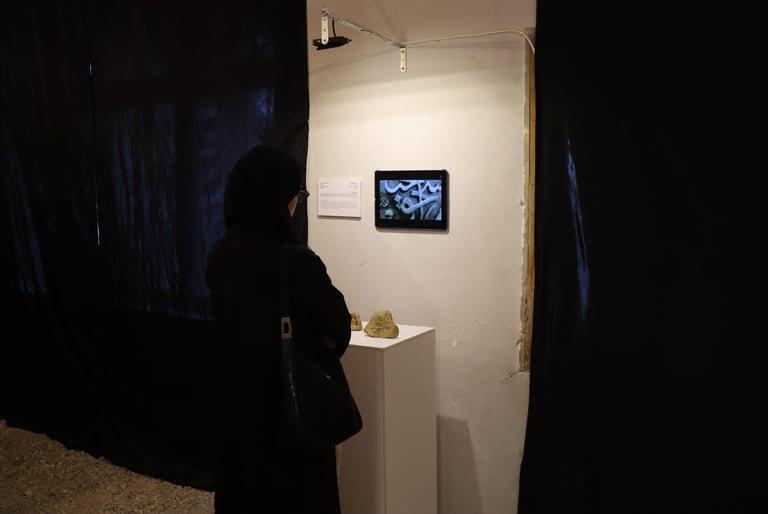
IN SITU is not simply a title; it is an epistemic position that begins with a fundamental question: what remains of meaning once things are removed from their context? In its original sense, in situ refers to what is found in its place—where significance emerges from the relationship between object and ground, trace and environment, discovery and site. When something is displaced, its meaning weakens, and the bond that connects it to its origin is fractured.
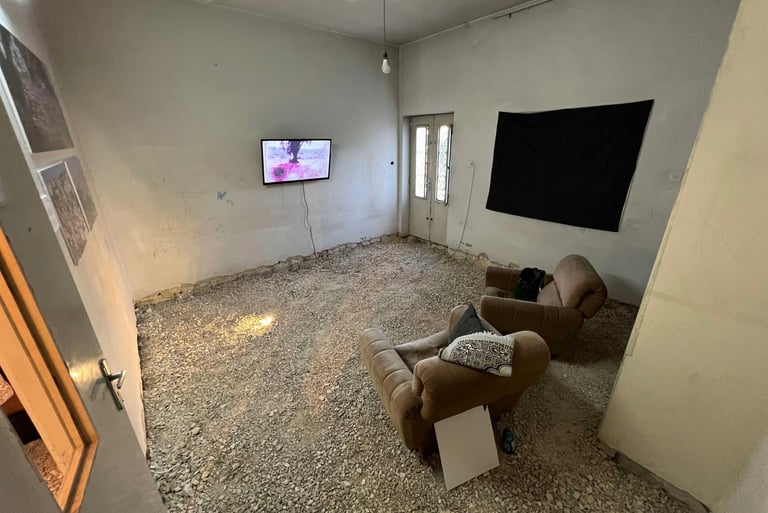
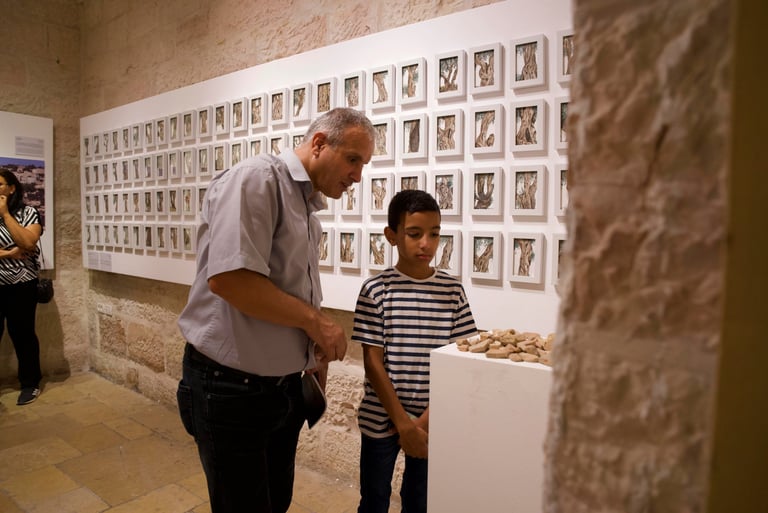
The exhibition extends this logic to Hebron as a city shaped by stratification, interruption, and continual re-inscription, where geography is repeatedly stripped of its own language. Tel Rumeida is approached as a model and a case study: a site often rendered “legible” through excavations that impose predetermined narratives, while traces are extracted from their soil and detached from the conditions that give them meaning.
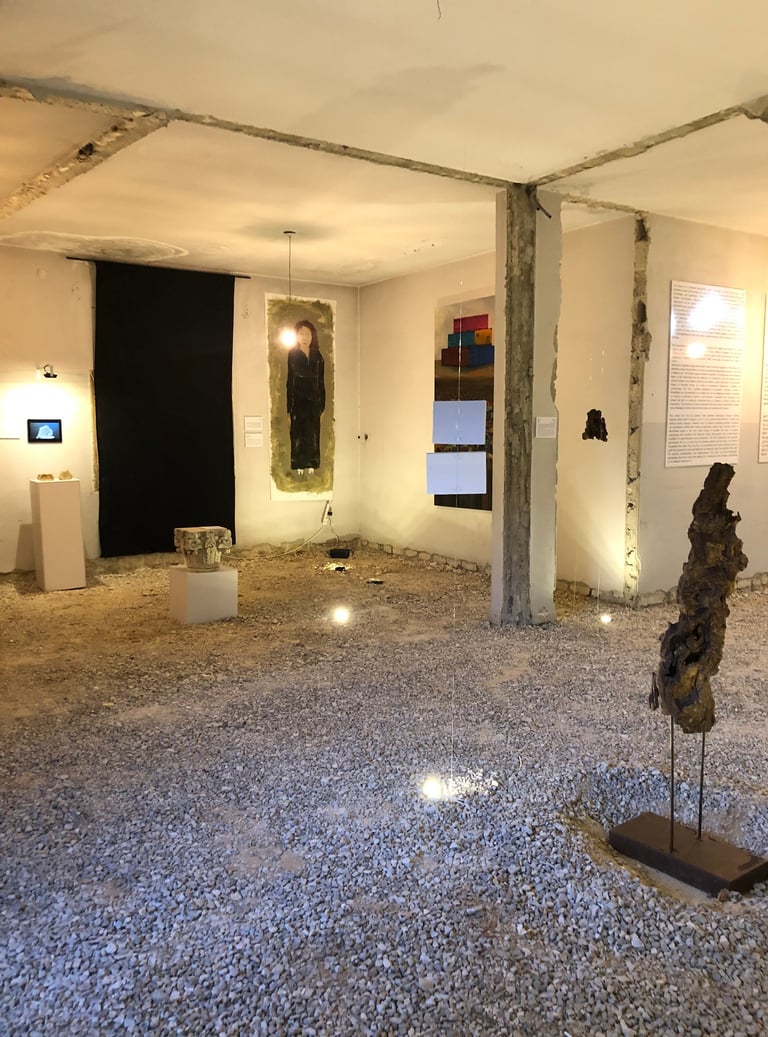
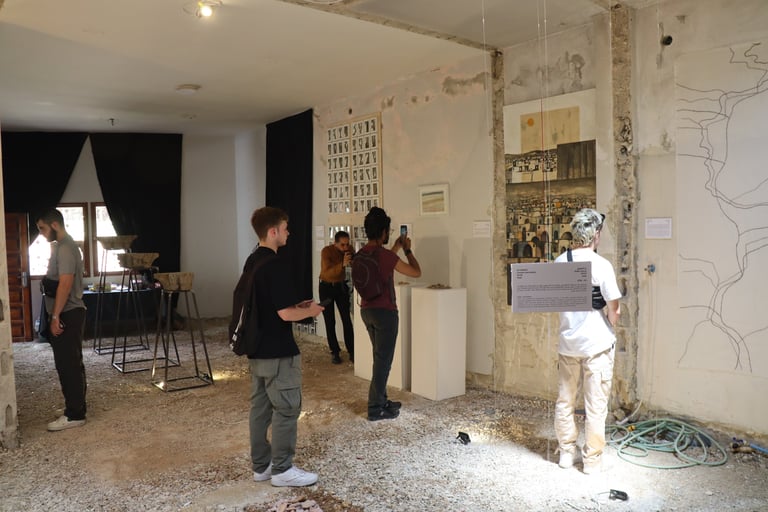
Against this rupture, IN SITU proposes a different form of excavation—one enacted through artistic practice as a method of reading. The exhibition develops a situated interpretation and a parallel narrative that seeks to reconnect trace to ground, ground to lived experience, and the present to the histories beneath it that have been denied articulation. In this process, art operates as a mode of knowledge-making rather than representation, insisting on defining place from within.
Here, the site is not treated as a backdrop for display but as a co-author of meaning. Matter and narrative, visibility and concealment, remain inseparable. IN SITU articulates a curatorial approach grounded in working from inside the place itself, where meaning is produced through proximity, continuity, and the refusal to sever history from its terrain.