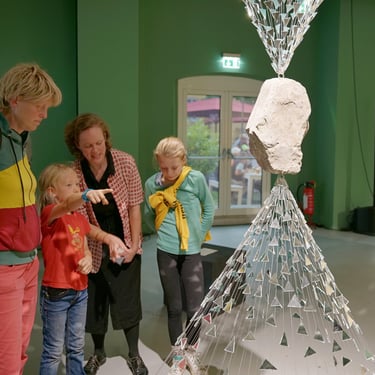
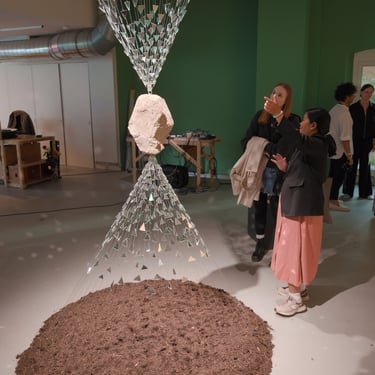
On Memory and the Weight of Being.
Installation · 2025
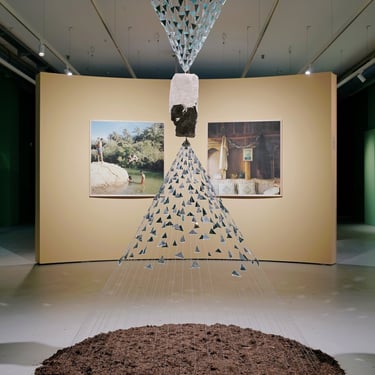
On Memory and the Weight of Being For me, memory is not a faculty of the mind — it is a weight, a force, and a condition of being. It does not pass through us lightly; it stays, accumulates, thickens. Memory has its own gravity. The memory of the past presses into the present, and even the future arrives carrying echoes of what has been. I live within a history marked by loss, exile, and occupation — and in such a reality, memory does not behave the way it does in safer places. It fragments, folds in on itself, protects what cannot be spoken. It forgets in order to remember.
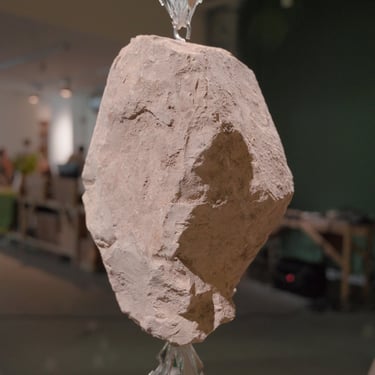
What draws me most is the relationship between two different memory-worlds: the memory of matter, and the memory of spirit. The memory held in soil, skin, and broken objects; and the memory carried in dreams, visions, and a sense of origin that cannot be explained but only felt. These are not opposing realms — they reflect and speak to each other. But each pulls in a different direction. The memory of the body pulls us down, to the earth, to instinct, to grief. The memory of the spirit pulls us inward and upward, toward the unseen, the ephemeral, the eternal. In the Sufi tradition, memory is a form of divine remembrance — not of events, but of essence. To remember is not only to resist forgetting, but to trace one's way back to the source. I return to this constantly.
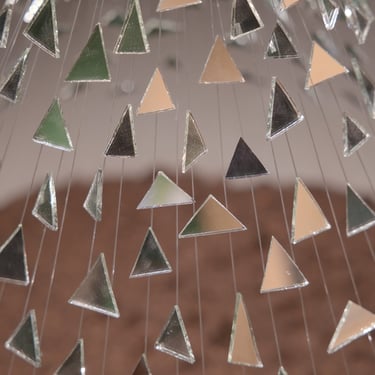
In a world that insists on erasure — political, historical, emotional — I ask: what kind of memory can survive? And what does it mean to hold memory in a way that does not destroy you? In my work, I do not seek to resolve this tension. I stay within it. I explore how memory splits to protect itself, how it folds around the unspeakable, how it survives through shadows, fragments, rituals, and silence. I am drawn to the memory that lives in dust, in stone, in fabric, and in the body’s quiet gestures — but also to the memory that appears only when we stop looking for it, in the unexpected language of dreams. We often think of forgetting as absence. But I have learned that forgetting is sometimes what memory becomes in order to endure.
It is never innocent. Forgetting chooses. It shields and betrays. It edits in order to preserve. And somewhere in this dance between remembering and forgetting, between the pull of matter and the pull of spirit, we live. Or rather — we persist. This is how I understand the relationship between memory and identity: not as a stable ground, but as a shifting terrain of tension — where being is continually formed in the dialogue between what we remember and what we are asked to forget.